


Modern threats demand advanced preparation and absolute readiness. Effective tactical training is achieved through a progressive, structured system; one that transforms individual skillsets and unit capabilities in measurable stages. This expert guide, formulated for procurement professionals and defence leaders, outlines the five foundational stages of live-fire tactical training, drawing on proven solutions and operational scenarios to ensure your teams develop mission-ready firepower with confidence.
1. DRY FIRE TACTICAL TRAINING
Where discipline becomes instinct.
Dry fire training is the foundation of every serious tactical program. It’s where operators engrain weapon handling, movement, and decision-making without the noise of live fire. No bullets, no shortcuts. Just repetition, correction, and muscle memory forged under pressure.
Core Benefits
- Safe habituation: Personnel build robust safety protocols without the risk of discharge.
- Skill mastery: Fundamental actions such as trigger pull, sight alignment, and stance are repeated until instinctive.
- Risk-free adaptation: Allows for adaptation of tactics and procedural corrections with zero ammunition expenditure.
Operational Example
A unit rehearses room-clearing drills on a scenario-based dry fire platform, practising swift entry, target identification, and coordinated team movements. This builds tactical skills safely before advancing to live fire.

Dry-fire pistol training – Operators reinforce grip, trigger control, and sight alignment using non-lethal systems before advancing to live fire.
2. STATIC LIVE FIRE TACTICAL TRAINING
Precision under pressure.
This is where steel meets skill. Static live fire is the first live-ammo phase; designed to build disciplined marksmanship in a controlled, repeatable environment. The focus is accuracy, consistency, and safety, before movement or complexity are introduced.
Core Benefits
- Marksmanship development: Trainees gain objective data on shooting accuracy, grouping, and recoil management.
- Controlled environment: All proficiency tests and drills are conducted on fixed targets from stationary positions, removing unnecessary variables.
- Safety enforcement: Range protocols are cemented, reducing accident risk during more complex later stages.
Operational Example
Modular static ranges equipped with configurable lanes enable scalable exercises for both pistol and rifle qualification standards. Defence forces across Europe employ these ranges for annual certification as part of their tactical training regimes for both new recruits and veteran units.
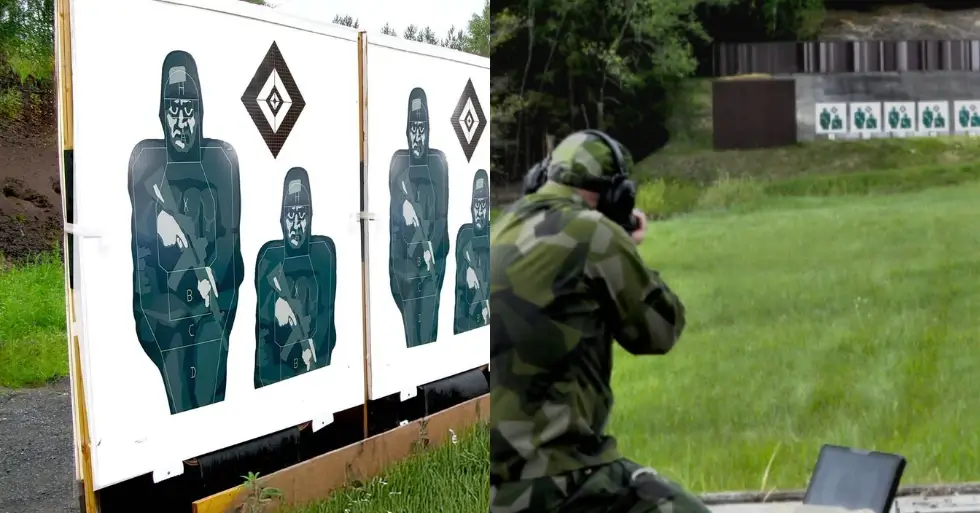
W5 eSCORE Box Targets – Wireless scoring system delivering instant feedback and high-precision data for static marksmanship training.
3. Reactive target engagement in tactical training
Think fast, shoot faster.
This phase adds movement, unpredictability, and judgment. Operators face pop-up, moving, and shoot/no-shoot targets, forcing split-second decisions under pressure. It sharpens threat recognition, reaction time, and cognitive control in combat-like conditions.
Core Benefits
- Cognitive agility: Operators are challenged to make split-second identification and engagement decisions under tactical constraints.
- Threat discrimination: Shoot/no-shoot drills enhance the ability to distinguish friend, foe, or civilian in complex tactical environments.
- Stress conditioning: Simulates the unpredictable tempo of real combat, reinforcing composure under operational pressure.
Operational Example
Units leverage programmable pop-up and moving target systems simulating urban insurgency, convoy ambush, or public space scenarios. These are critical components of modern tactical training. Swedish and Baltic armed forces have adopted such technologies to improve real-time threat recognition and enhance multi-domain operational effectiveness.

W5 Heavy Target Lifter – Full-size pop-up system built for tank and armour target training. Supports silhouette recognition, hit detection, and realistic engagement of large battlefield threats.
4. Armour & mobile target engagement tactical training
Firepower on the move.
Operators train against moving and armoured threats, replicating the speed and complexity of mechanised warfare. This stage builds crew coordination, target tracking, and engagement skills in scenarios that reflect real-world vehicle combat. It bridges the gap between live-fire precision and battlefield application.
Core Benefits
- Crew coordination: Teams refine vehicle crew drills, from turret cooperation to rapid engagement of fleeting targets during tactical exercises.
- Battlefield simulation: Targets replicate realistic vehicle profiles and battlefield movement, supporting anti-armour and convoy defence tactical training.
- Adaptation to terrain and speed: Trainees develop the ability to adjust fire and tactics in unpredictable or high-speed environments.
Operational Example
Advanced armour target training systems and CV90 crew simulators empower Scandinavian brigades to rehearse mobile assaults, urban entry with IFVs, and reactive armoured defence with unrivalled tactical precision.

W5 LIMO Target Mover – Mobile, cable-driven system for dynamic live-fire training. Enables realistic vehicle and air-to-ground target engagement.
5. Full-mission profile tactical training
Mission readiness under real conditions.
This final stage fuses all core skills—live fire, manoeuvre, communication, and command—into full-spectrum scenarios under battlefield stress. Operators are tested in complex, unpredictable conditions that demand teamwork, adaptability, and precision when it matters most.
Core Benefits
- Teamwork under duress: Exercises test communication, adaptive tactics, and morale in high-pressure tactical scenarios.
- Complex scenario integration: Operations incorporate unknown targets, night or adverse weather, and impromptu threat escalation.
- Deployment confidence: Forges a unified approach, individual skill blends seamlessly into collective effectiveness through rigorous tactical training.
Operational Example
The Swedish Defence Forces deploy full-mission tactical training platforms proven through SEK 48M FMV contracts, enabling lifelike multi-unit exercises from night urban strikes to all-arms battle group deployments in adverse climates.

Full-mission profile training – operators coordinate from a mobile command platform during a multi-unit exercise.
Final word. build readiness, one stage at a time
The five-stage training system isn’t theory, it’s the proven path used by today’s top defence forces to shape adaptable, lethal teams. Each phase builds on the last, using structured progression and modular tools to forge combat-ready personnel and maximise tactical advantage.
Why W5 Solutions and MSS Defence?
Combat-Tested Systems That Deliver
W5’s live-fire platforms are fielded, scalable, and built to meet the demands of modern conflict. From dry fire to full-mission profile, every system is validated in real-world operations, not just in spec sheets.
Tailored to Your Mission, Not Just Your Budget
Every client has different terrain, tempo, and doctrine. That’s why we build systems around your goals, not generic templates. The result: faster readiness, stronger returns, and no time lost in translation.
Full-Spectrum Support
From concept to deployment, our team provides technical consultation, installation, and ongoing training. We’re not just suppliers, we’re your training partner.
Ready to upgrade your tactical training structure?
Talk to MSS Defence today. We’ll help you build a live-fire solution that reflects your reality, and gives your people the edge when it counts.


