Choosing torso protection becomes difficult when two products solve different operational problems rather than competing in the same category. Mission profile, expected threats, and mobility requirements matter more than appearance.
The key distinction in the plate carrier vs fragmentation vest decision is that a plate carrier, such as the Agilite K-Zero SF, carries separately supplied hard armour plates and provides no protection on its own, while a fragmentation vest, such as the PGD FRAG Tactical Vest, delivers built-in soft armour and fragmentation protection immediately, with the option to add hard ESAPI plates for rifle threats.
- 0.97 kg, the Agilite K-Zero SF empty carrier prioritises mobility and load carriage.
- 2.39 kg to 3.93 kg, the PGD FRAG Tactical Vest weight includes protective soft armour, depending on size.
- NIJ 0101.04 Level IIIA covers handgun threats including .44 Magnum and 9 mm FMJ, not rifle threats.
- STANAG 2920 V50 592 m/s is the PGD FRAG fragmentation rating for explosive fragment testing.
- ESAPI plates can be fitted to both systems for rifle protection when compatible plates are supplied.
What is the real difference between a plate carrier and a fragmentation vest?
The real difference is that they begin from different threat models. A plate carrier is a platform for carrying hard armour plates, whereas a fragmentation vest is already armour before any hard plates are installed.
That distinction changes operational planning. A lightweight carrier concentrates protection where hard plates sit, allowing greater freedom of movement and reduced fatigue during assaults, raids and other highly mobile tasks. A fragmentation vest spreads soft armour around the torso, making it more suitable where blast fragments and handgun threats are expected from multiple directions.
ESAPI, or Enhanced Small Arms Protective Insert, plates serve different roles in each system. In a carrier they provide the primary protection. In a soft armour vest they supplement the existing protection by adding rifle capability without replacing the handgun and fragmentation coverage already present.
For more background on selecting a carrier platform, see our plate carrier selection guide.
How do the Agilite K-Zero SF and PGD FRAG Tactical Vest compare?
They compare as mobility first versus coverage first, not as two versions of the same product.
| Criterion | Agilite K-Zero SF | PGD FRAG Tactical Vest |
|---|---|---|
| Product type | Plate carrier | Soft armour tactical vest |
| Protection out of the box | None. Hard plates supplied separately. | 360 degree soft ballistic and fragmentation protection |
| Ballistic standard | None without plates | NIJ 0101.04 Level IIIA, NIJ 0115.00 S1 stab resistance |
| Fragmentation protection | None without armour plates | STANAG 2920 V50 592 m/s |
| Weight | 0.97 kg empty | 2.39 kg to 3.93 kg depending on size |
| Hard plate compatibility | Accepts ballistic plates in S, M or L | Front and back ESAPI plate pockets built in |
| Modular coverage | Compatible with MOLLE and placard systems, modular attachments | Optional collar, throat, biceps and groin protectors |
| Warranty | Not stated | 7 year ballistic, 2 year textile carrier |
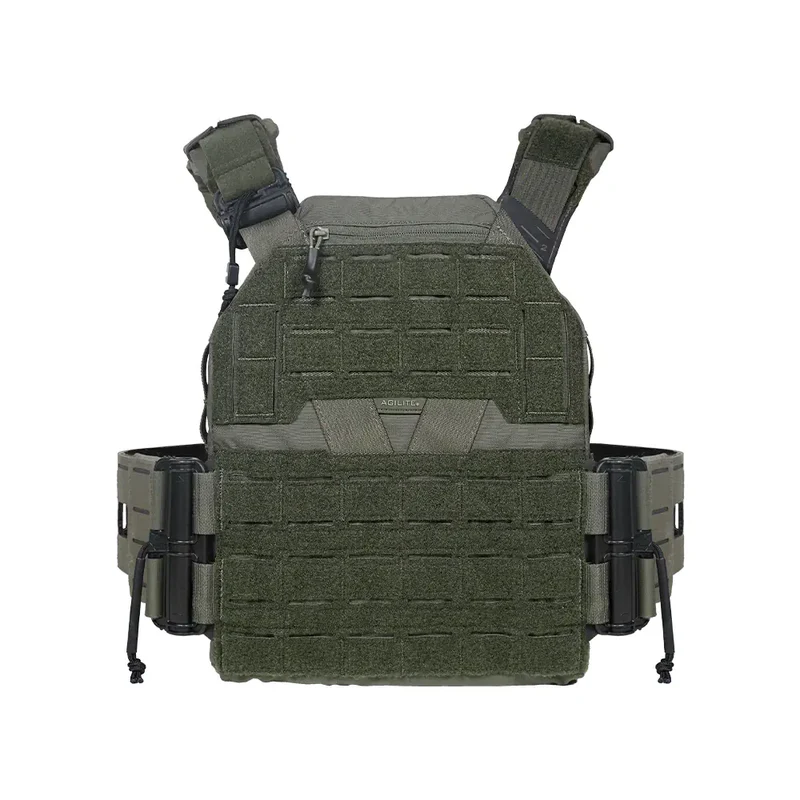
The Agilite K-Zero SF weighs 0.97 kg empty and is built around modular load carriage. It accepts ballistic plates in S, M or L sizes, includes a semi rigid Micro Warfighter cummerbund, quick release Duraflex buckles, integrated cable management, removable shoulder pads and compatibility with both MOLLE, Modular Lightweight Load-carrying Equipment, and placard systems. It is important to remember that these features improve carriage and integration, not ballistic performance.
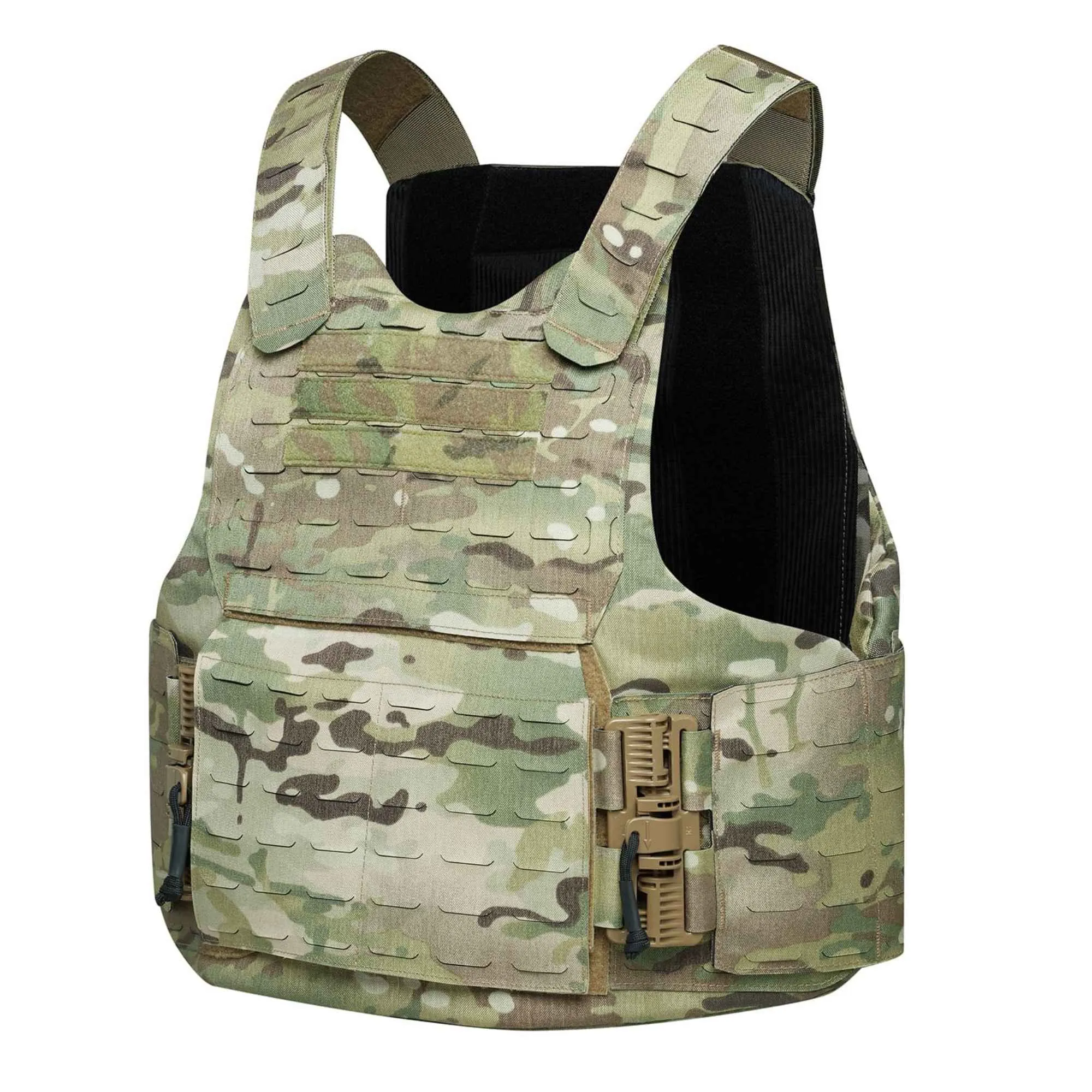
The PGD FRAG Tactical Vest arrives as protective equipment. It provides 360 degree ballistic and fragmentation coverage using PGD DELTA soft armour made from Teijin materials, includes front and back ESAPI plate pockets, uses Outlast PCM temperature regulation, and offers optional biceps, collar, throat and groin protection for expanded coverage.
Which missions suit each system?
Mission requirements determine the better fit.
Where speed, agility and reduced carried weight drive operational success, a plate carrier offers clear advantages. Teams conducting dynamic entry, reconnaissance or assault tasks often prioritise movement efficiency while supplying their own hard plates matched to organisational requirements.
Where exposure to blast, fragmentation, extended patrols or static security is more likely, broader soft armour coverage becomes increasingly valuable. Roles such as explosive ordnance disposal support, checkpoint security and infrastructure protection may benefit from protection extending around the torso rather than concentrating solely over plate locations.
Neither approach replaces the other. They represent different methods of balancing survivability, endurance and freedom of movement.
How should we interpret the protection standards?
The standards describe different threats and should not be treated as interchangeable.
According to NIJ Standard 0101.04, Level IIIA soft armour is designed for specified handgun threats, including .44 Magnum and 9 mm FMJ, but it does not provide rifle protection. Rifle threats require hard armour plates, which is why ESAPI plates remain relevant whether they are installed in a carrier or a compatible vest.
Fragmentation ratings address another hazard altogether. Under STANAG 2920, V50 is a statistical test velocity for fragment resistance rather than a guarantee against every fragment strike. Fragmentation protection is intended for threats associated with explosive devices and artillery rather than direct rifle fire.
Operators planning complete loadouts may also find our plate carrier questions guide useful when integrating armour with the rest of their equipment.
Frequently Asked Questions
Can both systems use ESAPI plates?
Yes. Both products accommodate hard armour plates, but they do so differently. The Agilite K-Zero SF depends on separately supplied plates for ballistic protection, while the PGD FRAG Tactical Vest already includes soft armour and uses front and back ESAPI pockets to add rifle protection alongside its existing coverage.
Does the Agilite K-Zero SF stop bullets without plates?
No. The Agilite K-Zero SF is a plate carrier rather than armour. Its documented features relate to carrying equipment, modularity and comfort. Ballistic protection only exists where compatible hard armour plates have been installed.
Does the PGD FRAG Tactical Vest protect against rifles without ESAPI plates?
No. The vest is certified to NIJ 0101.04 Level IIIA for handgun threats and provides fragmentation protection, but rifle protection requires separately purchased ESAPI hard plates installed in the built in plate pockets.
Are the optional neck and groin protectors included with the PGD FRAG Tactical Vest?
No. The collar, throat, biceps and groin protectors are optional accessories. The base vest already provides 360 degree torso soft armour and fragmentation protection, while the additional components extend coverage for missions that justify the extra weight.
Is weight the only factor when selecting between these systems?
No. Weight influences endurance and mobility, but expected threats, operational tempo, required equipment integration and the need for all round soft armour coverage are equally important. The lightest option is not automatically the most suitable for every deployment.
The strongest choice is the one that matches the operational threat rather than chasing the lowest weight or the broadest specification. A carrier and a fragmentation vest solve different protection problems, and both remain valid when selected for the mission they were designed to support.