What’s the difference between night vision and thermal imaging? Can they be combined? What’s best for our mission set?
This guide is based on those real, frontline questions—not theory.
We break down the key differences between night vision, thermal imaging, and hybrid (fusion) systems, covering their strengths, tactical roles, and how they integrate into modern operations. It includes 21 of the most frequently asked questions—answered clearly for military and law enforcement professionals operating in low-visibility environments.
Understanding the Technology
1. What’s the real difference between night vision and thermal imaging?
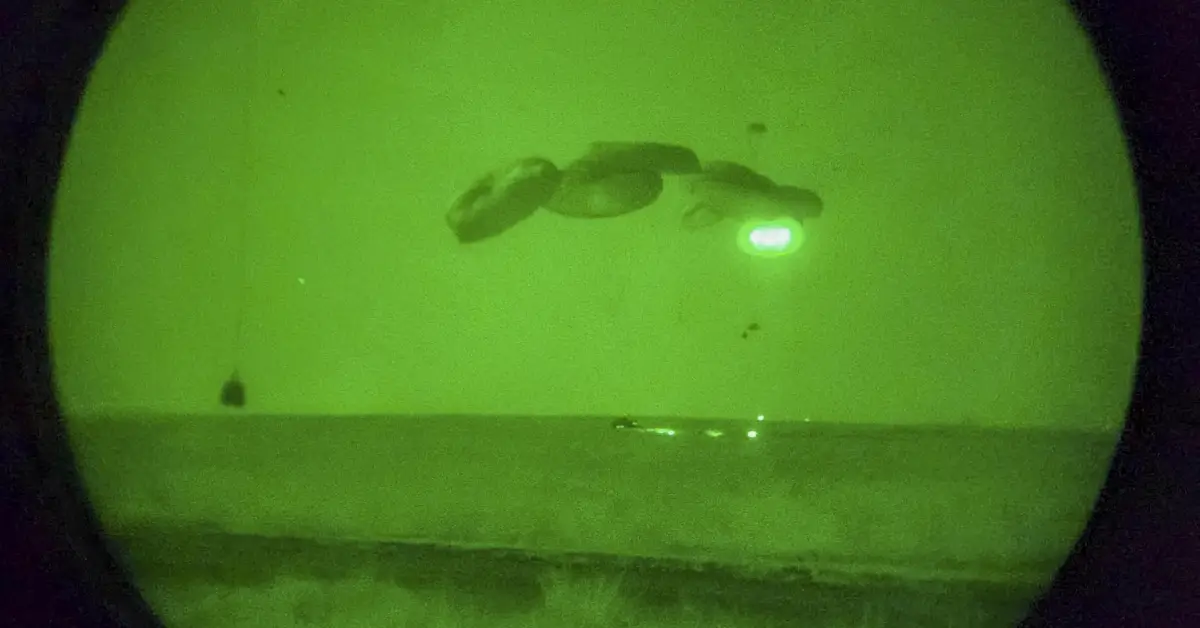
Night vision amplifies ambient light to create a visual image. It allows for recognition and navigation.
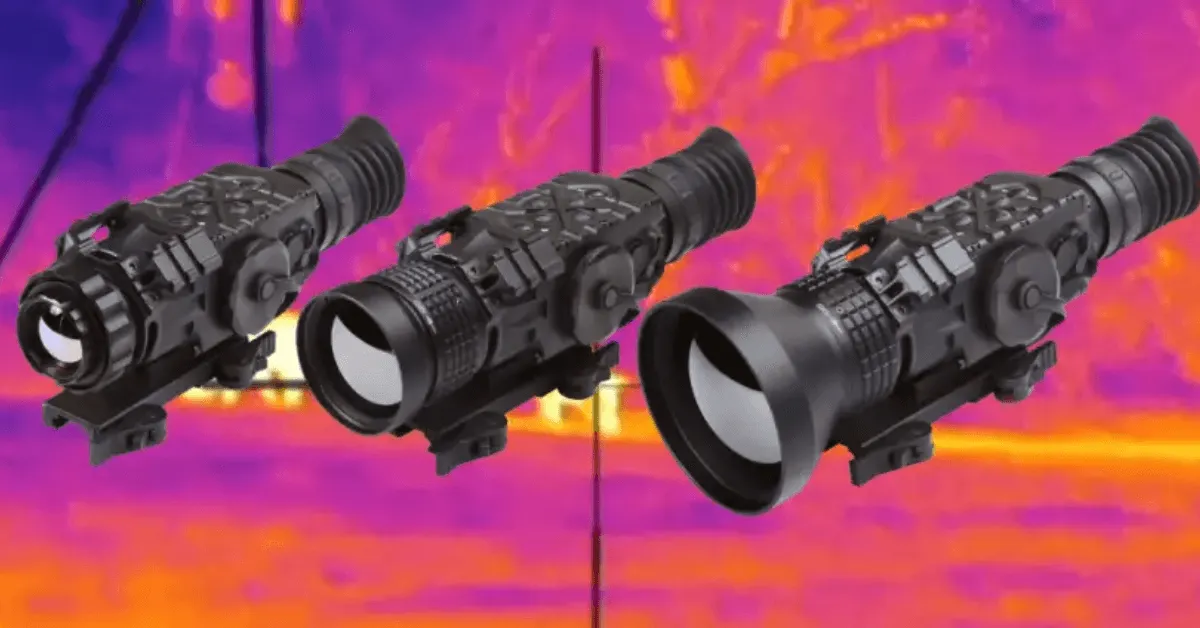
Thermal imaging detects heat signatures and excels at detection, even through smoke, fog, and foliage.
Hybrid systems combine both in a fused overlay, offering superior situational awareness.
2. Can night vision work in total darkness?
Not independently. It requires ambient light or an IR illuminator.
Thermal imaging works in complete darkness without any light source.
3. Why is night vision usually green, and can it be blue or white?
Green phosphor is traditional due to reduced eye strain.
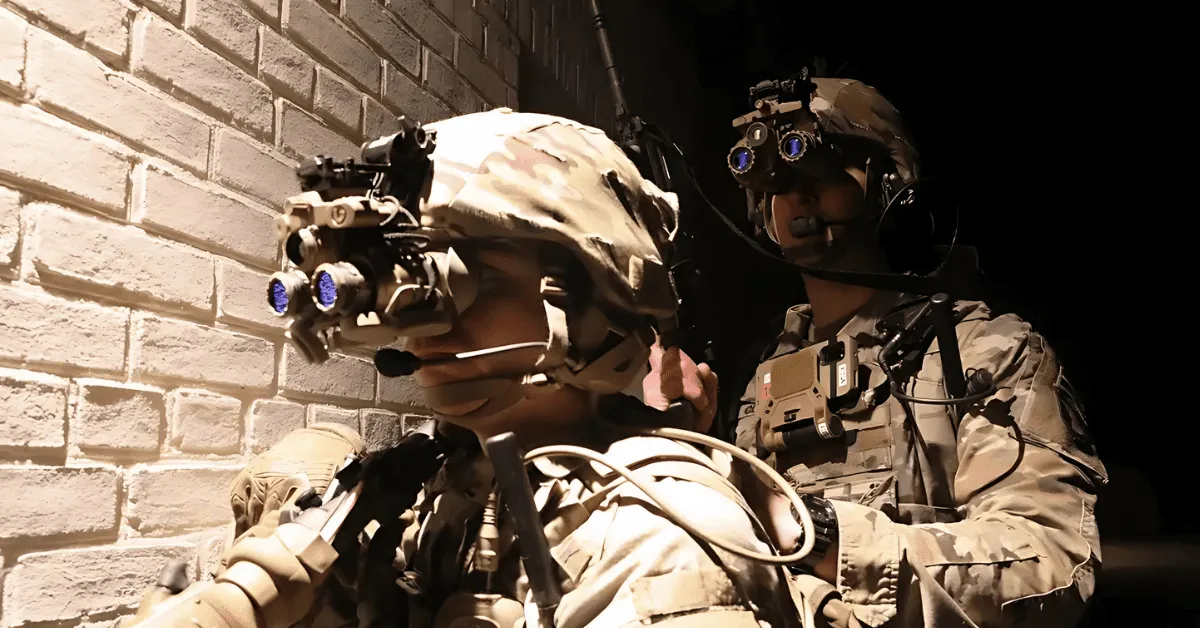
Modern systems utilise white phosphor, producing a blue-white image that enhances contrast and target recognition, a feature preferred by many special operations units.
4. What are hybrid/fusion systems, and who uses them?
Hybrid systems combine night vision and thermal overlays. They are widely used by special forces, reconnaissance units, and personnel operating in complex or obscured environments.
5. Which is better for target identification: thermal or night vision?
Thermal is superior for detection; night vision provides more precise identification.
The best practice is to use both when available or a hybrid system that combines their strengths.

Limitations and Operating Environment
6. Can thermal see through walls or glass?
No. Thermal only detects surface heat. It cannot penetrate walls or work effectively through glass, which reflects infrared radiation.
Night vision can operate through glass.
7. Do digital night vision systems match the performance of Gen 3 analogue systems?
Not yet. While digital night vision technology continues to improve, it still falls short of Gen 3 analogue systems in key areas, such as image clarity, low-light sensitivity, and responsiveness. Digital units often rely on infrared (IR) illuminators to function effectively in near-total darkness—an added dependency that can compromise concealment and tactical advantage.
8. Is Gen 3 always better than Gen 2?
Gen 3 remains the gold standard for military and tactical operations, offering superior low-light performance, longer tube life, and better image clarity. However, advanced Gen 2+ systems—especially those with high-gain tubes—are closing the gap. Some modern Gen 2+ units now deliver impressive performance in low-light environments, making them a viable option for specific missions, particularly where budget or export restrictions are factors.
9. How long do night vision tubes last?
Gen 2: 2,000–5,000 hours
Gen 2+: 5,000–10,000 hours
Gen 3: 10,000+ hours
Tube life depends on use, maintenance, and storage conditions.
10. Can I be spotted while using night vision?
Yes, if you’re using an infrared illuminator. It’s visible to anyone else using night vision.
Thermal can detect you regardless, based on your heat signature.
11. Can thermal see through smoke, fog, or camouflage?
Yes. Thermal excels in adverse conditions and is effective against concealment, making it ideal for detection in obscured environments.
12. What’s the difference between cooled and uncooled thermal imaging?
Uncooled thermal imaging is compact and rugged, making it suitable for individual use.
Cooled thermal imaging offers a more extended range and higher sensitivity but requires more support and is typically used on platforms or for long-range targeting.
Use Cases and Integration
13. Does night vision work in cold or wet conditions?
Yes. Military-grade systems are designed for use in extreme environments. Batteries are the weak link in cold weather; lithium is recommended over alkaline.
14. Can I record or stream footage using night vision or thermal imaging?
Yes. Many modern systems offer video output, primarily digital and hybrid devices. Inline helmet-mounted cameras are also an option.
15. Does night vision affect depth perception?
Yes, particularly in monocular systems. Binocular systems restore stereo vision. Some digital systems offer overlays with range estimation to aid in-depth perception.
16. What about battery life—do these systems drain fast?
Night vision: 20–40+ hours on AA or CR123 batteries
Thermal and hybrid systems have shorter runtime. Extended missions benefit from external battery packs or integrated helmet power hubs.
17. Can I mount night vision or thermal weapons?
Yes. Use dedicated NV/thermal sights or clip-on systems in front of day optics. Avoid mounting helmet-mounted NV behind a scope; instead, use IR aiming solutions or passive optics.
18. What’s the effective range of night vision vs thermal?
Night vision (Gen 3): up to 300–500 metres for identification
Thermal (uncooled): up to 1,000 metres for detection
Hybrid: provides layered detection and recognition, depending on configuration.
19. Can I integrate NV or thermal with my scope, GPS, and rangefinder?
Yes. Many systems allow for integration with day scopes, ballistic calculators, GPS, and digital overlays.
Options vary depending on rail space, optic height, and power requirements. MSS Defence provides a complete system configuration tailored to the weapon platform and role.

Field Application and Operational Factors
20. Do hybrid systems add bulk or slow you down?
Not significantly. Current-generation hybrid systems are designed for use with helmets or weapons, offering manageable weight and a low profile. The performance gain far outweighs the added load in most mission profiles.
21. What’s the best helmet-mounted night vision setup for infantry?
There is no universal answer. The optimal setup depends on mission profile, terrain, threat level, and integration requirements with helmet, comms, and weapon systems.
MSS Defence provides tailored solutions based on operational requirements. Contact us to define the right system for your unit or role.
Final Word: Fit Your Optics to the Mission
Choosing the right night vision, thermal, or hybrid solution is a matter of operational alignment, not just budget. Whether you’re conducting night patrols, close-quarter entry, or overwatch in low-vis terrain, the proper setup will improve detection, survivability, and tempo.
- Tailored system configuration (helmet, weapon, comms)
- Field-tested NV, thermal, and hybrid platforms
- Government and unit-level procurement solutions
- Training and deployment support
Explore Our Full Catalogue
Browse Our Thermal Imaging Range
Browse Our Hybrid Vision Range